
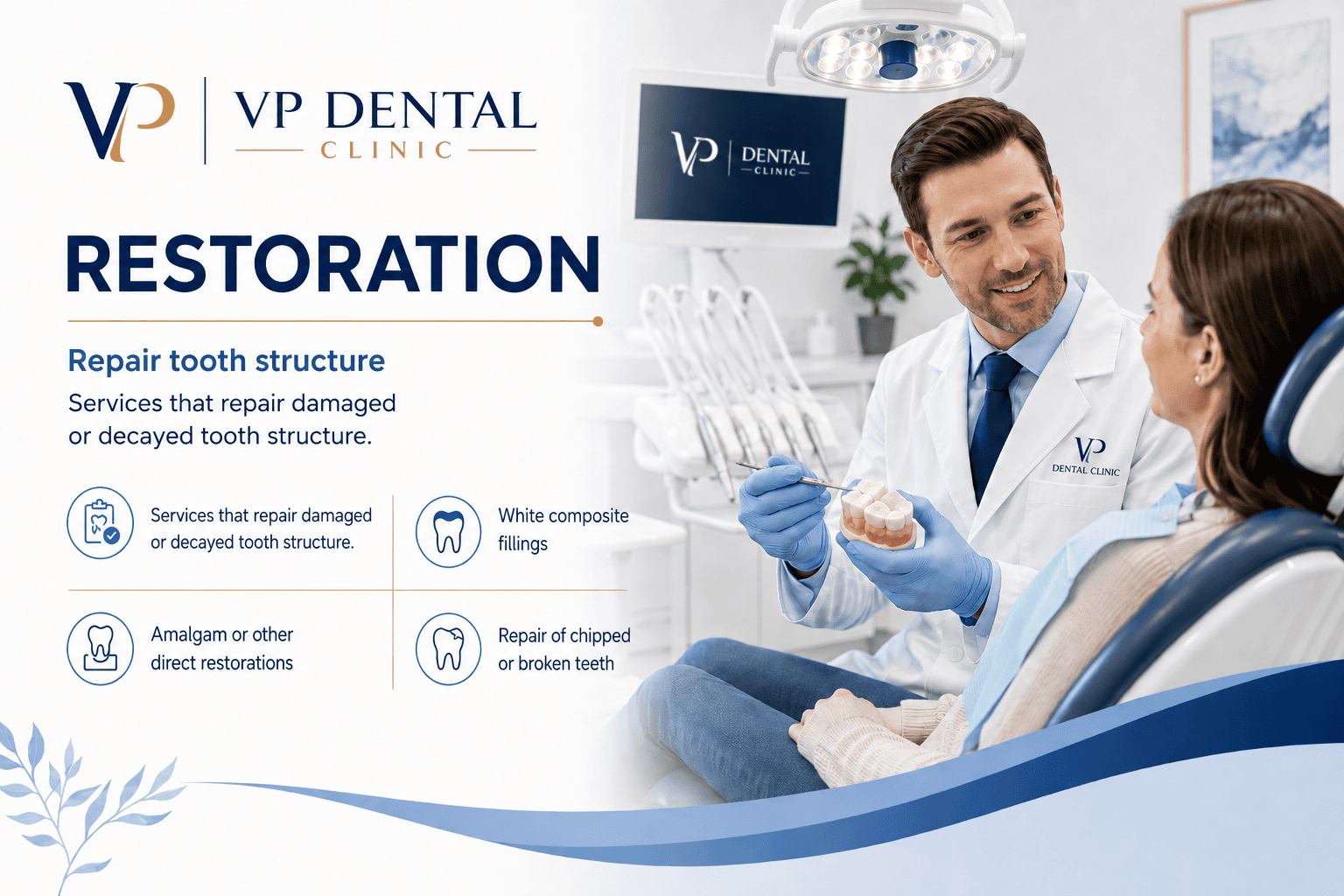
Repairing and Protecting Damaged Teeth
At VP Dental Clinic, restorative dentistry focuses on repairing teeth that have been affected by decay, fracture, wear, or structural damage. The goal of restoration is to rebuild tooth structure, improve function, protect remaining healthy tooth material, and support long-term oral health.
Restorative treatment may be recommended when a tooth has a cavity, a chip, a crack, an old or failing filling, or missing tooth structure that requires repair.
What Restorative Dental Care May Include
Restoration at VP Dental Clinic may include, but is not limited to:
- White composite fillings
- Amalgam or other direct restorations
- Build-ups to replace missing tooth structure
- Repair of chipped or broken teeth
- Replacement or repair of existing restorations
- Assessment of damaged, worn, or weakened teeth
- Treatment planning for restoring tooth function and appearance
The exact restorative treatment recommended depends on the condition of the tooth, the amount of remaining tooth structure, the location of the damage, bite forces, aesthetic considerations, and long-term treatment goals.
Our Restorative Care Process
1. Understanding the Concern
Your visit begins with a discussion about your symptoms, concerns, and goals. You may be experiencing sensitivity, discomfort, a broken tooth, a visible cavity, food trapping, or concern about the appearance of a tooth.
We take time to understand what you are noticing and how it affects your comfort, function, and confidence.
2. Examination and Diagnosis
The dentist examines the affected tooth or teeth and evaluates the surrounding gums, bite, and existing restorations. Dental X-rays or diagnostic records may be recommended when needed to assess the depth of decay, the size of an existing restoration, or the condition of the tooth structure beneath the surface.
A proper diagnosis helps determine whether a tooth can be restored with a direct filling, build-up, repair, or whether a different treatment option should be considered.
3. Explaining the Findings
After the examination, the dentist explains the findings in clear language. We discuss the condition of the tooth, why treatment may be needed, and what options are available.
Our goal is to help you understand the reason for the recommended restoration before treatment begins.
4. Treatment Planning
Restorative treatment planning considers the size and location of the damaged area, the strength of the remaining tooth, appearance, comfort, function, and long-term stability.
For small to moderate areas of decay or damage, a direct restoration such as a white composite filling may be appropriate. For teeth with more significant loss of structure, a build-up or additional treatment may be required.
5. Tooth Preparation
When treatment begins, the damaged, decayed, or weakened portion of the tooth is carefully prepared. The goal is to remove the problem area while preserving as much healthy tooth structure as possible.
The tooth is then shaped and prepared for the selected restorative material.
6. Placement of the Restoration
A restorative material is placed to rebuild the missing or damaged area of the tooth. White composite fillings are commonly used for natural-looking repairs, while other direct restorations may be recommended depending on the clinical situation.
The restoration is shaped to support proper function, comfort, and appearance.
7. Bite Check and Final Adjustments
After the restoration is placed, the dentist checks your bite and makes adjustments if needed. This helps ensure the restored tooth feels comfortable when chewing and does not create unnecessary pressure.
The final result should feel smooth, functional, and comfortable.
8. Home Care and Follow-Up
After restorative treatment, our team may provide instructions on what to expect, how to care for the restored tooth, and when to return for routine preventive visits.
Regular dental examinations help monitor restorations over time and identify any changes before they become more serious.
Common Reasons a Tooth May Need Restoration
A restorative dental treatment may be recommended for:
- Cavities or tooth decay
- Chipped or broken teeth
- Worn tooth structure
- Cracked or weakened teeth
- Old fillings that are leaking, fractured, or failing
- Missing tooth structure
- Sensitivity caused by exposed or damaged areas
- Functional or aesthetic repair needs
What to Expect During Your Visit
During a restorative dental appointment, you can expect a careful and organized process. The dentist will explain the condition of the tooth, review appropriate treatment options, prepare the tooth, place the restoration, and check the final fit and bite.
Our team focuses on comfort, clear communication, and restoring the tooth in a way that supports both function and long-term oral health.
Why Restorative Dentistry Matters
Restorative dentistry helps repair damage before it becomes more serious. Timely treatment may help preserve natural teeth, improve chewing function, reduce sensitivity, and prevent the progression of decay or structural breakdown.
At VP Dental Clinic, restoration is not only about filling a tooth. It is about rebuilding strength, protecting oral health, and helping patients maintain comfortable, functional smiles.