
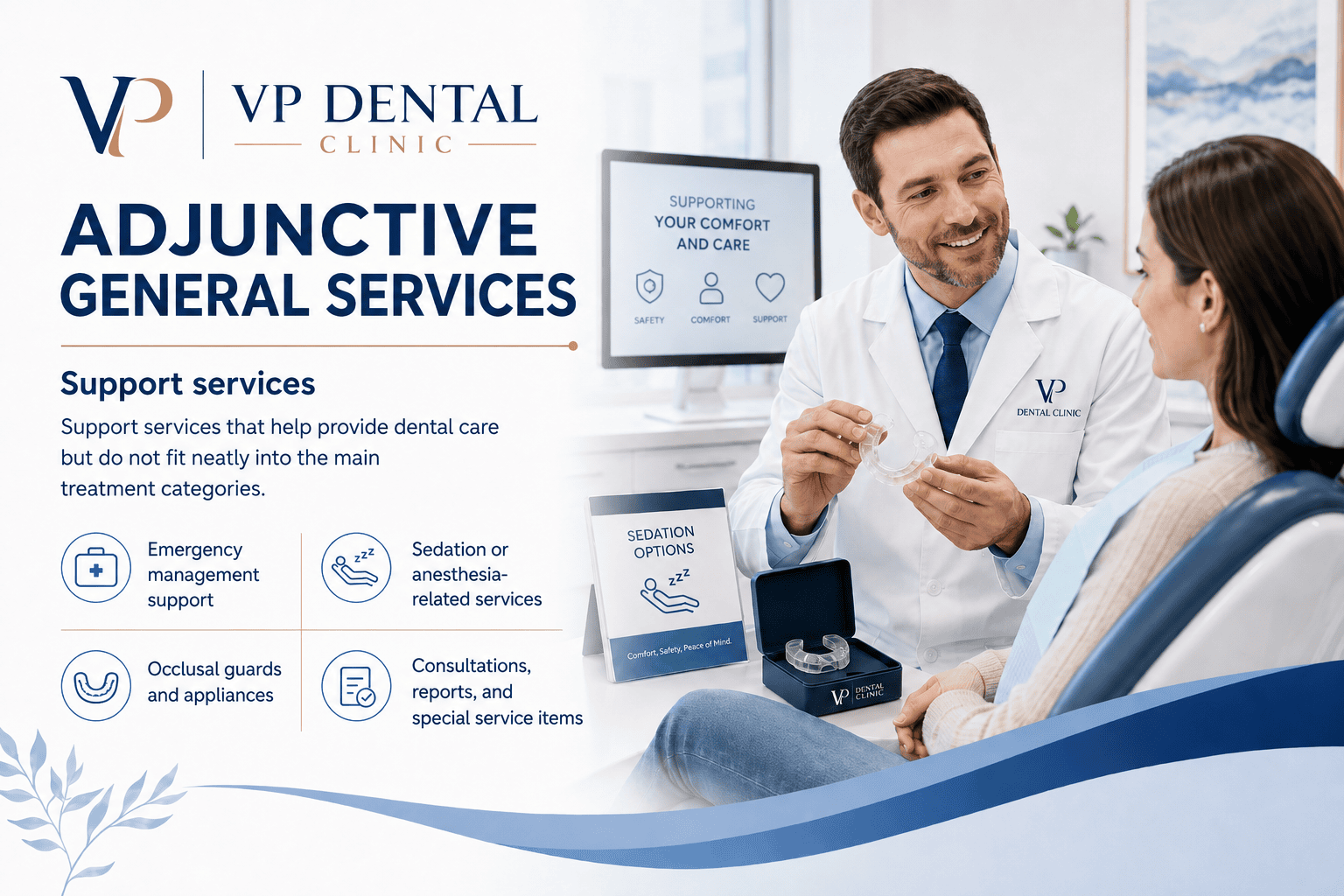
Supportive Dental Services Around Your Care
At VP Dental Clinic, adjunctive general services include supportive services that may be needed before, during, or after dental treatment. These services help support patient comfort, safety, treatment planning, emergency management, documentation, and the overall delivery of dental care.
Adjunctive services may not always be the main treatment itself, but they can play an important role in making dental care more complete, organized, and appropriate for the patient’s needs.
What Adjunctive General Services May Include
Adjunctive General Services at VP Dental Clinic may include, but are not limited to:
- Emergency management support
- Sedation or anesthesia-related services
- Occlusal guards and appliances, where listed
- Consultations
- Reports
- Special service items
- Supportive care related to treatment planning
- Additional services required to assist with dental diagnosis, treatment, or follow-up
The exact adjunctive services recommended depend on the patient’s condition, treatment needs, comfort level, medical history, type of procedure, documentation requirements, and overall care plan.
Our Adjunctive Care Process
1. Understanding the Patient’s Needs
Your visit begins with understanding your concern, treatment goals, comfort level, and any medical or dental factors that may affect your care. Some patients may require additional support during treatment, while others may need consultation, documentation, appliances, or emergency-related care.
We take time to identify what supporting services may be needed to provide care responsibly and efficiently.
2. Reviewing Medical and Dental History
Because adjunctive services may relate to comfort, emergency care, sedation, anesthesia, appliances, or treatment planning, your medical and dental history may be reviewed carefully. This may include medications, allergies, previous dental experiences, health conditions, and any concerns that may affect treatment.
This step helps the dental team plan care safely and appropriately.
3. Assessment and Treatment Planning
The dentist evaluates your oral health condition and determines whether any supportive services are needed as part of the overall treatment plan. This may include emergency support, an appliance, a consultation, a report, or sedation or anesthesia-related considerations.
The purpose is to ensure that the main dental treatment is supported by the right planning, documentation, and patient care measures.
4. Emergency Management Support
Emergency management support may be needed when a patient has an urgent dental concern, discomfort, infection, trauma, or another situation requiring timely attention. This support may involve assessment, stabilization, documentation, treatment planning, medication considerations, referral where appropriate, or follow-up instructions.
The goal is to help manage the immediate concern and determine the appropriate next step.
5. Sedation or Anesthesia-Related Services
Sedation or anesthesia-related services may be considered in selected situations where additional comfort or procedural support is appropriate. The recommendation depends on the type of procedure, patient needs, health history, and clinical suitability.
Before any sedation or anesthesia-related service is provided, the dentist will explain the purpose, considerations, requirements, and any instructions that apply.
6. Occlusal Guards and Appliances
Occlusal guards and other dental appliances may be recommended when there are concerns such as grinding, clenching, tooth wear, jaw discomfort, or the need to protect teeth and restorations. These appliances are designed based on the patient’s condition and treatment goals.
The dentist will assess the bite, tooth wear, symptoms, and appliance needs before making a recommendation.
7. Consultations, Reports, and Special Service Items
Consultations, reports, and special service items may be required to support diagnosis, treatment planning, insurance coordination, referral, documentation, or communication with other healthcare providers where appropriate.
These services help ensure that information is properly reviewed, recorded, and communicated as part of the patient’s care.
8. Explanation and Patient Guidance
When adjunctive services are recommended, our team explains why they are needed and how they support your overall care. We aim to provide clear information so patients understand the purpose of each service and how it fits into the treatment plan.
Common Reasons Adjunctive Services May Be Needed
Adjunctive general services may be recommended for:
- Urgent or emergency dental situations
- Support before or after dental treatment
- Additional comfort needs during treatment
- Grinding or clenching concerns
- Occlusal guard or appliance needs
- Treatment planning support
- Reports or documentation
- Consultation requirements
- Special service items related to care
- Follow-up or supportive management
What to Expect During Your Visit
During an appointment involving adjunctive general services, you can expect the dental team to review your needs, explain why the service may be recommended, and describe how it supports your care.
Depending on the situation, the visit may involve assessment, records, appliance planning, emergency support, documentation, comfort planning, or coordination of next steps.
Why Adjunctive General Services Matter
Adjunctive general services help support safe, organized, and patient-focused dental care. They may assist with emergency management, patient comfort, appliance therapy, treatment planning, and communication.
At VP Dental Clinic, these supportive services are approached with attention to professionalism, clear documentation, patient comfort, and responsible treatment planning.