
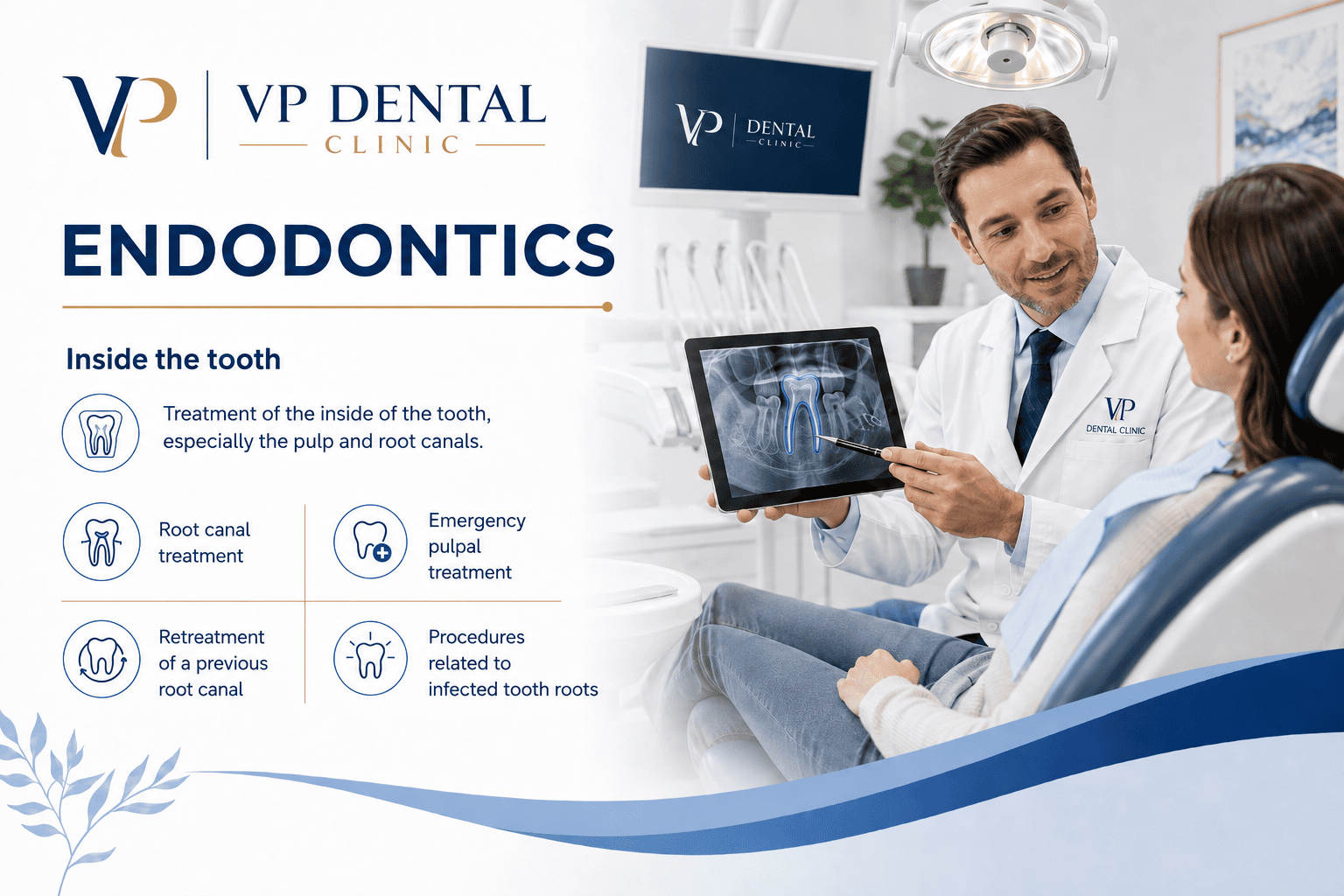
Caring for the Inside of the Tooth
At VP Dental Clinic, endodontic care focuses on diagnosing and treating problems inside the tooth, including the dental pulp, nerve tissue, and root canal system. Endodontic treatment may be needed when decay, cracks, trauma, or infection reach the inner part of the tooth.
The goal of endodontic care is to relieve discomfort, treat infection where present, and help preserve the natural tooth whenever appropriate.
What Endodontic Care May Include
Endodontics at VP Dental Clinic may include, but is not limited to:
- Root canal treatment
- Emergency pulpal treatment
- Retreatment of a previous root canal
- Procedures related to infected tooth roots
- Assessment of tooth pain or sensitivity
- Diagnosis of pulpal or root-related concerns
- Treatment planning for teeth with nerve or root canal involvement
The exact treatment recommended depends on the condition of the tooth, symptoms, diagnostic findings, X-rays, infection status, previous treatment history, and the long-term restorability of the tooth.
Our Endodontic Care Process
1. Understanding Your Symptoms
Your visit begins with a discussion about what you are experiencing. Symptoms may include tooth pain, sensitivity to hot or cold, pain when biting, swelling, tenderness, or discomfort that does not go away.
We take time to understand when the symptoms started, what makes them better or worse, and whether the tooth has had previous treatment or trauma.
2. Examination and Diagnostic Testing
The dentist examines the tooth and surrounding area to identify the source of the concern. This may include checking the tooth, gums, bite, existing restorations, and any signs of infection or inflammation.
Diagnostic tests and dental X-rays may be recommended to help assess the tooth roots, surrounding bone, and root canal system.
3. Explaining the Diagnosis
Once the assessment is complete, the dentist explains the findings in clear language. If the pulp or root canal system appears to be affected, we discuss what that means and why endodontic treatment may be recommended.
Our goal is to help you understand the condition of the tooth before making treatment decisions.
4. Treatment Planning
Endodontic treatment planning considers the tooth’s condition, the presence of infection, the amount of remaining tooth structure, previous dental treatment, comfort, function, and long-term prognosis.
Where appropriate, root canal treatment may be recommended to clean and treat the inside of the tooth. In other cases, emergency pulpal treatment, retreatment, or additional procedures may be considered.
5. Root Canal Treatment
Root canal treatment is used to treat the inside of a tooth when the pulp is inflamed, infected, or no longer healthy. During treatment, the affected tissue inside the tooth is removed, the root canal system is cleaned and shaped, and the space is sealed.
The purpose is to treat the source of the problem and help preserve the natural tooth where possible.
6. Emergency Pulpal Treatment
Emergency pulpal treatment may be recommended when a patient has urgent tooth pain or symptoms related to the nerve area of the tooth. The immediate goal is to assess the source of the discomfort and begin appropriate care to help manage the condition.
Further treatment may be needed depending on the diagnosis and the tooth’s condition.
7. Retreatment of a Previous Root Canal
In some cases, a tooth that previously had root canal treatment may develop new symptoms or signs of infection. Retreatment may be considered when the tooth can still be restored and there is a reasonable basis to treat the root canal system again.
The dentist will review the condition of the tooth, previous treatment, X-rays, and restorative options before making a recommendation.
8. Restoring and Protecting the Tooth
After endodontic treatment, the tooth often requires a proper restoration to seal and protect it. Depending on the amount of remaining tooth structure, this may involve a filling, build-up, or crown.
Protecting the tooth after treatment is an important part of long-term success.
Common Reasons Endodontic Treatment May Be Needed
Endodontic care may be recommended for:
- Deep tooth decay
- Tooth infection
- Cracked or fractured teeth
- Dental trauma
- Persistent tooth pain
- Sensitivity that does not resolve
- Swelling or tenderness near a tooth
- Problems related to a previous root canal
- Infected tooth roots
What to Expect During Your Visit
During an endodontic appointment, you can expect a careful and structured process. The dentist will review your symptoms, examine the tooth, use diagnostic records when appropriate, explain the findings, and discuss treatment options.
Our team focuses on clear communication, comfort, and helping you understand each step of care.
Why Endodontic Care Matters
Endodontic care can help treat problems inside the tooth before they become more serious. When appropriate, it may allow a natural tooth to be preserved rather than removed.
At VP Dental Clinic, endodontic treatment is approached with careful diagnosis, patient education, and a focus on restoring comfort, function, and long-term oral health.