
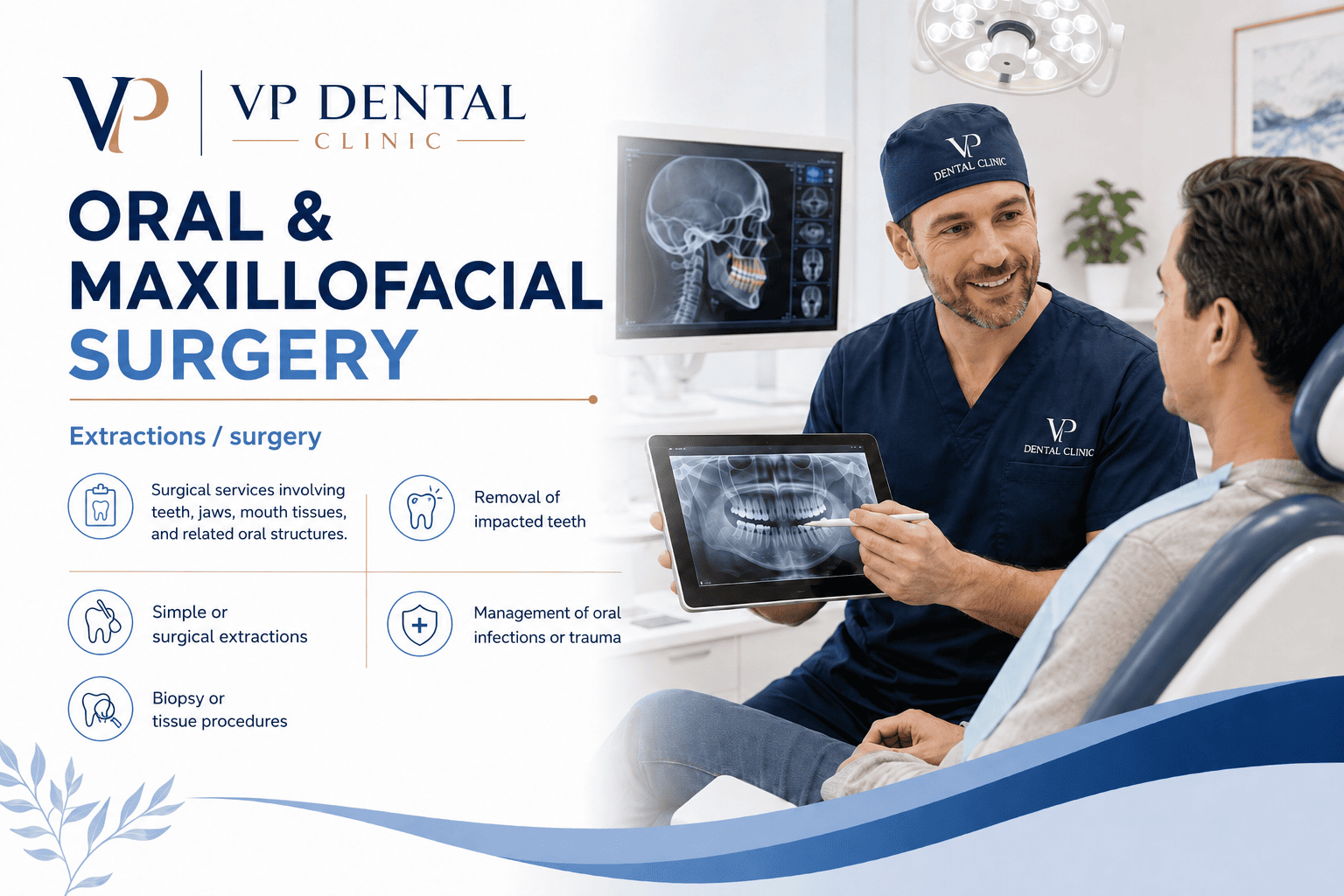
Surgical Care for Teeth, Mouth, and Supporting Oral Structures
At VP Dental Clinic, oral and maxillofacial surgery includes dental procedures involving the teeth, jaws, gums, and related oral tissues. These services may be recommended when a tooth cannot be restored, when an impacted tooth requires assessment, when oral tissue concerns need evaluation, or when infection or trauma affects the mouth.
Our approach focuses on careful diagnosis, clear communication, patient comfort, and appropriate treatment planning before any surgical procedure is performed.
What Oral & Maxillofacial Surgical Care May Include
Oral and maxillofacial surgical care at VP Dental Clinic may include, but is not limited to:
- Simple extractions
- Surgical extractions
- Removal of impacted teeth
- Biopsy or oral tissue procedures
- Management of oral infections
- Management of dental or oral trauma
- Assessment of teeth, gums, jaws, and oral tissues
- Treatment planning for surgical dental needs
The exact procedure recommended depends on the patient’s symptoms, oral health condition, diagnostic findings, tooth position, infection status, medical history, and overall treatment goals.
Our Oral Surgery Care Process
1. Understanding the Concern
Your visit begins with a discussion about your symptoms, concerns, and reason for seeking care. You may be experiencing tooth pain, swelling, a broken tooth, infection, trauma, difficulty with an impacted tooth, or concern about a change in the oral tissues.
We take time to understand your situation and determine whether surgical care may be appropriate.
2. Medical and Dental History Review
Before any surgical procedure, your medical and dental history is reviewed. This may include medications, allergies, health conditions, previous dental treatment, bleeding concerns, and other information that may affect treatment planning.
This step helps the dental team provide care safely and responsibly.
3. Examination and Diagnostic Records
The dentist examines the affected area, including the tooth or teeth, gums, bite, jaw, and surrounding oral tissues. Dental X-rays or diagnostic records may be recommended to evaluate tooth roots, bone support, infection, tooth position, impacted teeth, or trauma-related concerns.
A complete assessment helps determine the most appropriate next step.
4. Explaining the Findings
After the examination, the dentist explains the findings in clear language. If surgical treatment is recommended, we discuss why it may be needed, what the procedure involves, what alternatives may exist, and what to expect before and after treatment.
Our goal is to help you make an informed decision with a clear understanding of the proposed care.
5. Treatment Planning
Oral surgical treatment planning considers the condition of the tooth or tissue, complexity of the procedure, infection status, comfort, healing expectations, medical considerations, and whether referral to a specialist may be appropriate.
Some procedures can be managed in a general dental setting, while more complex cases may require referral to an oral and maxillofacial surgeon.
6. Simple or Surgical Extractions
A tooth extraction may be recommended when a tooth is severely damaged, decayed, infected, fractured, loose, impacted, or cannot be predictably restored. A simple extraction may be possible when the tooth is visible and accessible. A surgical extraction may be required when the tooth is broken, impacted, or more difficult to access.
The dentist will explain the type of extraction recommended and the reasons for that approach.
7. Removal of Impacted Teeth
Impacted teeth are teeth that have not fully erupted into the mouth or are blocked by other teeth, bone, or soft tissue. Impacted teeth may require monitoring, treatment planning, or removal depending on symptoms, position, risk of infection, and surrounding structures.
The dentist will assess the situation and explain whether treatment or referral is recommended.
8. Biopsy or Oral Tissue Procedures
If an unusual area, tissue change, or lesion is identified in the mouth, further evaluation may be recommended. In selected cases, a biopsy or tissue procedure may be needed to help determine the nature of the concern.
Any oral tissue concern should be assessed carefully and managed appropriately
9. Management of Oral Infections or Trauma
Oral infections and dental trauma may require timely assessment. Depending on the condition, treatment may involve drainage, extraction, medication, stabilization, referral, or another appropriate course of care.
The priority is to identify the source of the problem, reduce risk, and plan treatment based on the clinical findings.
10. Post-Treatment Instructions and Follow-Up
After an oral surgical procedure, our team provides instructions to support healing and reduce complications. This may include guidance on oral hygiene, eating, activity, bleeding control, medication use, and when to contact the clinic.
Follow-up care may be recommended depending on the procedure and healing progress.
Common Reasons Oral Surgical Care May Be Needed
Oral and maxillofacial surgical care may be recommended for:
- Severely damaged teeth
- Broken teeth that cannot be restored
- Tooth infection
- Impacted teeth
- Dental trauma
- Swelling or oral infection
- Loose or non-restorable teeth
- Oral tissue changes
- Biopsy or tissue evaluation needs
- Surgical removal of teeth or oral structures
What to Expect During Your Visit
During an oral surgery consultation or appointment, you can expect a careful review of your concern, medical history, examination, diagnostic records where appropriate, explanation of findings, and discussion of treatment options.
If surgery is recommended, the dentist will explain the procedure, expected healing, aftercare instructions, and whether specialist referral is appropriate.
Why Oral Surgical Care Matters
Oral surgical care can help manage infection, remove non-restorable teeth, address impacted teeth, evaluate oral tissue concerns, and support long-term oral health. Proper diagnosis and planning are important for safe and effective treatment.
At VP Dental Clinic, oral and maxillofacial surgical care is approached with professionalism, patient education, and attention to comfort, safety, and appropriate follow-up.