
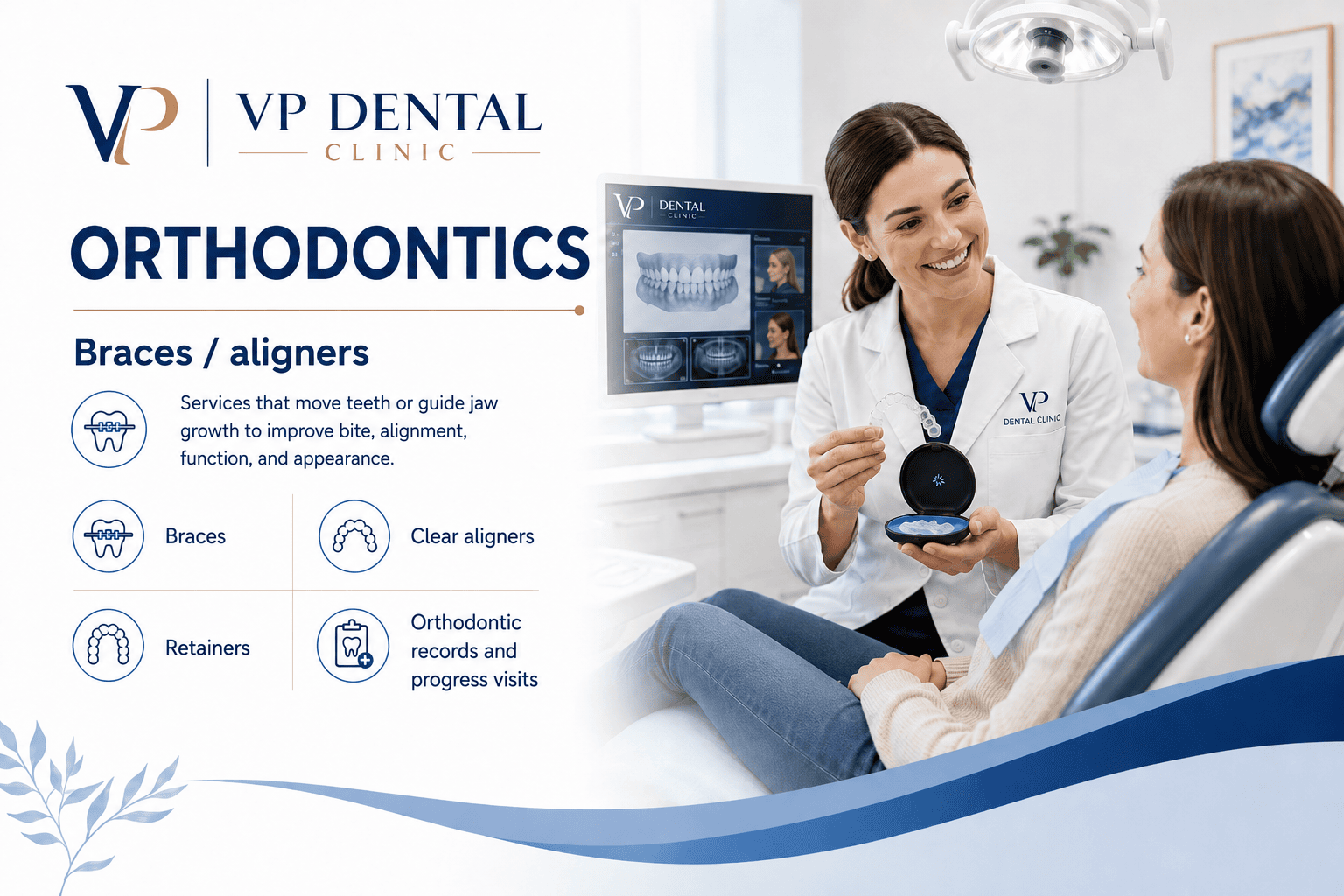
Supporting Alignment, Bite, Function, and Smile Appearance
At VP Dental Clinic, orthodontic care focuses on the alignment of teeth and the way the upper and lower teeth fit together. Orthodontic treatment may help improve bite function, support oral hygiene, enhance smile appearance, and address spacing, crowding, or alignment concerns.
Orthodontic care may be considered for children, teens, or adults depending on oral development, tooth position, bite relationship, treatment goals, and overall dental health.
What Orthodontic Care May Include
Orthodontics at VP Dental Clinic may include, but is not limited to:
- Braces
- Clear aligners
- Retainers
- Orthodontic records
- Orthodontic progress visits
- Assessment of tooth alignment
- Bite evaluation
- Treatment planning for spacing, crowding, or tooth movement concerns
The exact orthodontic option recommended depends on the patient’s age, tooth position, bite, jaw development, oral health, treatment complexity, and suitability for specific appliances or aligner systems.
Our Orthodontic Care Process
1. Understanding Your Goals
Your visit begins with a discussion about your concerns and goals. You may be interested in straighter teeth, improved bite function, easier cleaning, closing spaces, correcting crowding, or maintaining results after previous orthodontic treatment.
We take time to understand what you would like to improve and how orthodontic care may fit into your overall dental plan.
2. Examination and Bite Assessment
The dentist evaluates the teeth, gums, bite, jaw relationship, spacing, crowding, tooth wear, and oral hygiene. This assessment helps determine whether orthodontic treatment may be appropriate and whether additional records are needed.
A proper evaluation is important before recommending braces, clear aligners, retainers, or another orthodontic option.
3. Orthodontic Records
Orthodontic records may be recommended to support diagnosis and treatment planning. These records may include dental photographs, X-rays, digital scans or impressions, bite records, and notes about tooth position and alignment.
These records help the dental team understand the current condition and plan tooth movement more carefully.
4. Explaining the Findings
After reviewing the examination and records, the dentist explains the findings in clear language. We discuss the alignment concerns, bite relationship, treatment options, expected steps, limitations, and whether referral to an orthodontic specialist may be appropriate for more complex cases.
Our goal is to help patients understand their options before beginning treatment.
5. Treatment Planning
Orthodontic treatment planning considers the position of the teeth, bite, gum health, bone support, age, oral hygiene, treatment goals, and the level of complexity.
Some patients may be suitable for clear aligners. Others may require braces or specialist orthodontic assessment. Retainers may also be recommended to maintain tooth position after treatment.
6. Braces
Braces are orthodontic appliances used to move teeth gradually over time. They may be recommended for various alignment or bite concerns depending on the patient’s needs and treatment plan.
The dentist will explain whether braces are an appropriate option or whether referral for specialist care should be considered.
7. Clear Aligners
Clear aligners are removable appliances designed to move teeth in a planned sequence. They may be suitable for selected patients with mild to moderate alignment concerns, depending on the case.
Clear aligner treatment requires consistent wear, good oral hygiene, progress monitoring, and patient cooperation.
8. Retainers
Retainers are used to help maintain tooth position after orthodontic treatment or to prevent unwanted movement in selected cases. Retainers may be removable or fixed, depending on the patient’s needs.
Wearing and maintaining retainers as instructed is important for preserving treatment results.
9. Progress Visits
Orthodontic progress visits allow the dental team to monitor tooth movement, appliance fit, oral hygiene, comfort, and treatment progress. Adjustments or updated aligners may be provided depending on the treatment plan.
These visits are important to keep treatment moving in the intended direction.
Common Reasons Orthodontic Care May Be Considered
Orthodontic care may be recommended for:
- Crowded teeth
- Spacing between teeth
- Crooked or rotated teeth
- Bite concerns
- Teeth that are difficult to clean due to alignment
- Relapse after previous orthodontic treatment
- Smile appearance concerns
- Need for retainers
- Monitoring of tooth and jaw development
What to Expect During Your Visit
During an orthodontic consultation or assessment, you can expect a careful review of your teeth, bite, oral health, and goals. The dentist may recommend orthodontic records to better understand your case and explain treatment options.
If treatment is appropriate, the process, expected appointments, responsibilities, and maintenance requirements will be reviewed before treatment begins.
Why Orthodontic Care Matters
Orthodontic care can improve more than the appearance of the smile. Proper alignment may support better cleaning, improved bite function, reduced food trapping, and more stable long-term oral health.
At VP Dental Clinic, orthodontic care is approached with careful assessment, clear communication, and treatment planning focused on function, comfort, appearance, and long-term maintenance.